
Flotation Unit
The crushed ore from the crushing unit is transferred to the plant silo and then conveyed via dedicated belt systems into the flotation unit, which consists of two main sections: lead flotation and zinc flotation.
The feed first undergoes wet grinding in the primary mill. It is then directed to hydrocyclones for classification. Based on centrifugal force, materials are separated into two streams: particles finer than 75 microns and coarser than 75 microns. The finer fraction (overflow) is sent to the conditioners, while the coarser fraction (underflow) is redirected to a secondary ball mill for further grinding. The material then returns to the hydrocyclones. This closed-circuit grinding continues until the particle size is reduced below 75 microns and the material can be transferred to the conditioners.
In the conditioners, the material undergoes chemical conditioning through the addition of reagents such as collectors, depressants, and frothers, according to the predesigned residence time. The conditioned slurry is then fed into the lead flotation cells, which include the rougher, scavenger, and cleaner stages.
The resulting lead concentrate, with an approximate grade of 60% lead, is sent to designated concentrate ponds. The tailings from the lead flotation stage serve as the feed for the zinc flotation circuit, which includes its own set of conditioners and flotation cells. The final zinc concentrate, with an approximate grade of 50% zinc, is likewise transferred to corresponding concentrate ponds.
The nominal input capacity of the company’s flotation plants is 2,000 tons per day. The main products include sulfide concentrates of lead and zinc, as well as lead and zinc carbonates.
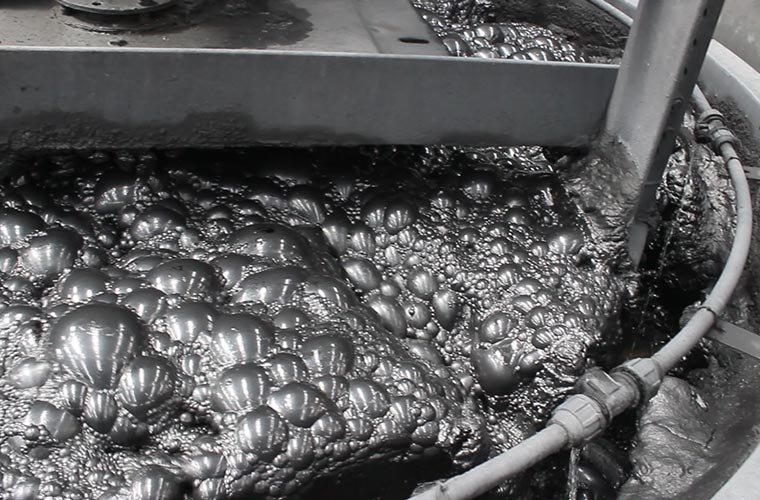

Flotation Unit
The crushed ore from the crushing unit is transferred to the plant silo and then conveyed via dedicated belt systems into the flotation unit, which consists of two main sections: lead flotation and zinc flotation.
The feed first undergoes wet grinding in the primary mill. It is then directed to hydrocyclones for classification. Based on centrifugal force, materials are separated into two streams: particles finer than 75 microns and coarser than 75 microns. The finer fraction (overflow) is sent to the conditioners, while the coarser fraction (underflow) is redirected to a secondary ball mill for further grinding. The material then returns to the hydrocyclones. This closed-circuit grinding continues until the particle size is reduced below 75 microns and the material can be transferred to the conditioners.
In the conditioners, the material undergoes chemical conditioning through the addition of reagents such as collectors, depressants, and frothers, according to the predesigned residence time. The conditioned slurry is then fed into the lead flotation cells, which include the rougher, scavenger, and cleaner stages.
The resulting lead concentrate, with an approximate grade of 60% lead, is sent to designated concentrate ponds. The tailings from the lead flotation stage serve as the feed for the zinc flotation circuit, which includes its own set of conditioners and flotation cells. The final zinc concentrate, with an approximate grade of 50% zinc, is likewise transferred to corresponding concentrate ponds.
The nominal input capacity of the company’s flotation plants is 2,000 tons per day. The main products include sulfide concentrates of lead and zinc, as well as lead and zinc carbonates.